Call us today03 943 2001

Latest Update

20th June

Engineered Timber Floors vs Solid Timber Floors:

Engineered vs Solid Timber

Timber floors have always been a popular choice for their warmth, beauty, and timeless appeal. However, the natural tendency of solid timber to twist, cup, and warp over time has been a significant concern. In recent years, engineered timber floors have emerged as a reliable alternative that addresses these issues. In this article, we will explore the differences between engineered vs solid timber floors, with a particular focus on how engineered timber, particularly those with Unilin’s innovative Uniclic® joint, takes the battle against natural distortions to a whole new level.

Understanding the Nature of Timber:

Before we delve into the comparison, let’s understand the inherent characteristics of timber. Wood is a hygroscopic material, which means it absorbs and releases moisture based on its surroundings. As a result, solid timber floors can expand and contract due to changes in temperature and humidity, leading to twists, cups, and warps. These natural movements can cause significant issues, including uneven surfaces, gaps, and damage.

Engineered Timber Floors:

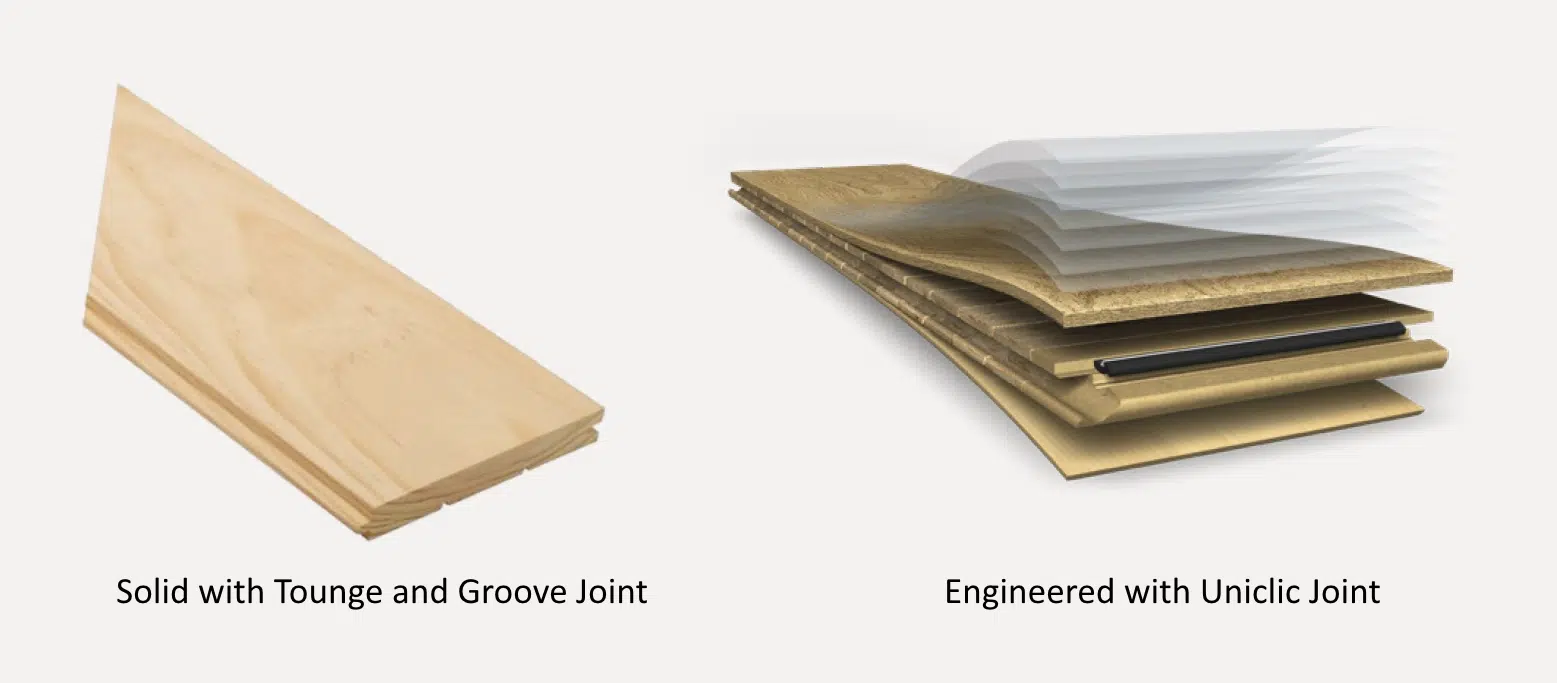
Engineered timber floors are designed to combat the inherent vulnerabilities of solid timber. They consist of multiple layers, typically composed of a top layer or “wear layer” of solid timber bonded to a core made from Recycled Hevea or spruce, high-density fibreboard (HDF) or plywood. This construction provides numerous benefits that help prevent twisting, cupping, and warping. Taking it even further, QuickStep & PERGO engineered timber floors incorporate the revolutionary Uniclic® joint system developed by Unilin, a leading manufacturer of green flooring solutions.

1. Stability through Layered Construction:

The layered structure of engineered timber floors significantly enhances their stability. The core layers are arranged in a crisscross pattern, counteracting the natural tendencies of timber to move. This cross-layered configuration ensures that any expansion or contraction is distributed evenly throughout the floor, reducing the risk of deformations. Unilin’s engineered timber floors, with their precisely engineered layers and advanced construction techniques, offer exceptional stability that surpasses conventional methods.

2. Enhanced Resistance to Moisture:

Moisture is a primary culprit behind timber floor distortions. Engineered timber floors mitigate this issue by incorporating moisture-resistant layers within their construction. The enginnered core is less prone to absorbing moisture compared to solid timber, making engineered floors more resistant to the effects of humidity and moisture fluctuations. Unilin’s engineered timber floors take this resistance to the next level with specially formulated moisture-resistant coatings and improved core materials.

3. Controlled Expansion and Contraction:

By using stable and reliable core materials, engineered timber floors offer better control over expansion and contraction. This controlled movement minimizes the risk of cupping, twisting, or warping, resulting in a more durable and long-lasting flooring solution. The Uniclic® joint system by Unilin revolutionizes the installation process, providing a secure and tight interlocking connection between each plank. This innovative joint not only simplifies installation but also enhances the floor’s ability to withstand natural movements, ensuring superior stability over time.

4. Greater Dimensional Stability:

Due to their layered composition, engineered timber floors exhibit enhanced dimensional stability compared to solid timber floors. They are less susceptible to changes in temperature and humidity, reducing the likelihood of structural issues and the need for constant maintenance. Unilin’s engineered timber floors, QuickStep & PERGO feature this joint, offering an even higher level of dimensional stability. The precision-engineered joint creates a seamless and tight fit between planks, minimizing gaps and preventing movement, resulting in an exceptionally stable floor.

Engineered timber floors, with their layered construction and resistance to natural distortions, have transformed the flooring industry. The incorporation of Unilin’s groundbreaking Uniclic® joint takes the battle against twists, cups, and warps to new heights. By combining stability, enhanced moisture resistance, controlled expansion and contraction, and greater dimensional stability, Unilin’s engineered timber floors offer a flooring solution that surpasses traditional solid timber floors. With the beauty of timber and the durability of engineered flooring, homeowners and commercial space owners can enjoy a stunning and long-lasting floor that defies nature’s forces

16th June

Transforming Rubberwood Trees from Ashes to Opportunities

In today’s world, sustainability has become an imperative consideration in every industry. Companies are increasingly seeking ways to minimize their environmental impact and contribute to a greener future. Unilin, a leading innovator in our industry, has taken a remarkable step towards sustainability by recycling rubberwood trees that were destined for destruction. In this blog, we explore the inspiring story of Unilin’s recycling efforts and the positive impact it has made on the environment.

The Rubberwood Conundrum:

Rubberwood trees, also known as Hevea brasiliensis, are primarily cultivated for their latex production, which is used to manufacture various rubber-based products. However, these trees have a limited lifespan for latex extraction, typically around 25-30 years. Once they reach the end of their productivity, rubberwood trees are often burned down to make space for new plantations. A process that contributes to deforestation and releases harmful greenhouse gases into the atmosphere.

Unilin’s Vision for Sustainability:

Unilin, a leader renowned for its innovative flooring solutions, recognized the environmental impact caused by the destruction of rubberwood trees. With a strong commitment to sustainability, the company embarked on a mission to find a better solution. One that would transform the fate of these trees and contribute positively to the planet.

The Unilin Recycling Initiative:

Unilin developed an innovative and sustainable solution by implementing a comprehensive recycling initiative for rubberwood trees. Instead of burning down these trees, Unilin partnered with local communities and farmers to salvage the wood and give it a new lease on life.

The Recycling Process:

Salvage and Selection: Unilin established a network of suppliers and farmers who identify and collect rubberwood trees that have reached the end of their latex production lifecycle. The wood is carefully selected based on quality and suitability for recycling.

Processing and Treatment: The collected rubberwood undergoes a thorough processing and treatment phase to remove impurities, such as bark and latex residue. This ensures that the recycled wood maintains its structural integrity and quality.

Manufacturing Flooring Products: The recycled rubberwood is then transformed into high-quality flooring products, utilizing Unilin’s cutting-edge manufacturing techniques. The wood is carefully engineered to provide excellent durability, stability, and aesthetic appeal.

Benefits of Unilin’s Recycling Efforts:

Environmental Preservation: Unilin’s recycling initiative significantly reduces deforestation and the release of greenhouse gases associated with burning rubberwood trees. By giving these trees a second life, Unilin helps preserve the natural ecosystem and minimizes its carbon footprint.

Resource Conservation:

Equally important recycling rubberwood reduces the demand for fresh timber, conserving valuable natural resources. Unilin’s commitment to sustainability extends beyond its recycling efforts. As the company also implements responsible forestry practices to ensure a sustainable supply chain.

Social and Economic Impact: Unilin’s partnership with local communities and farmers fosters economic development by creating employment opportunities. Moreover, the recycling initiative promotes social responsibility and strengthens the bond between Unilin and the communities it operates in.

Unilin’s dedication to sustainability and innovative thinking have turned a potential environmental concern into an inspiring success story. Through its recycling initiative for rubberwood trees, Unilin has demonstrated that responsible business practices can lead to positive outcomes for both the environment and society. By salvaging and transforming rubberwood into high-quality flooring products, Unilin sets an example for other industries to embrace sustainable practices and actively contribute to a greener future.

27th April

Why Cork Flooring Is Green And Healthy For Environment?

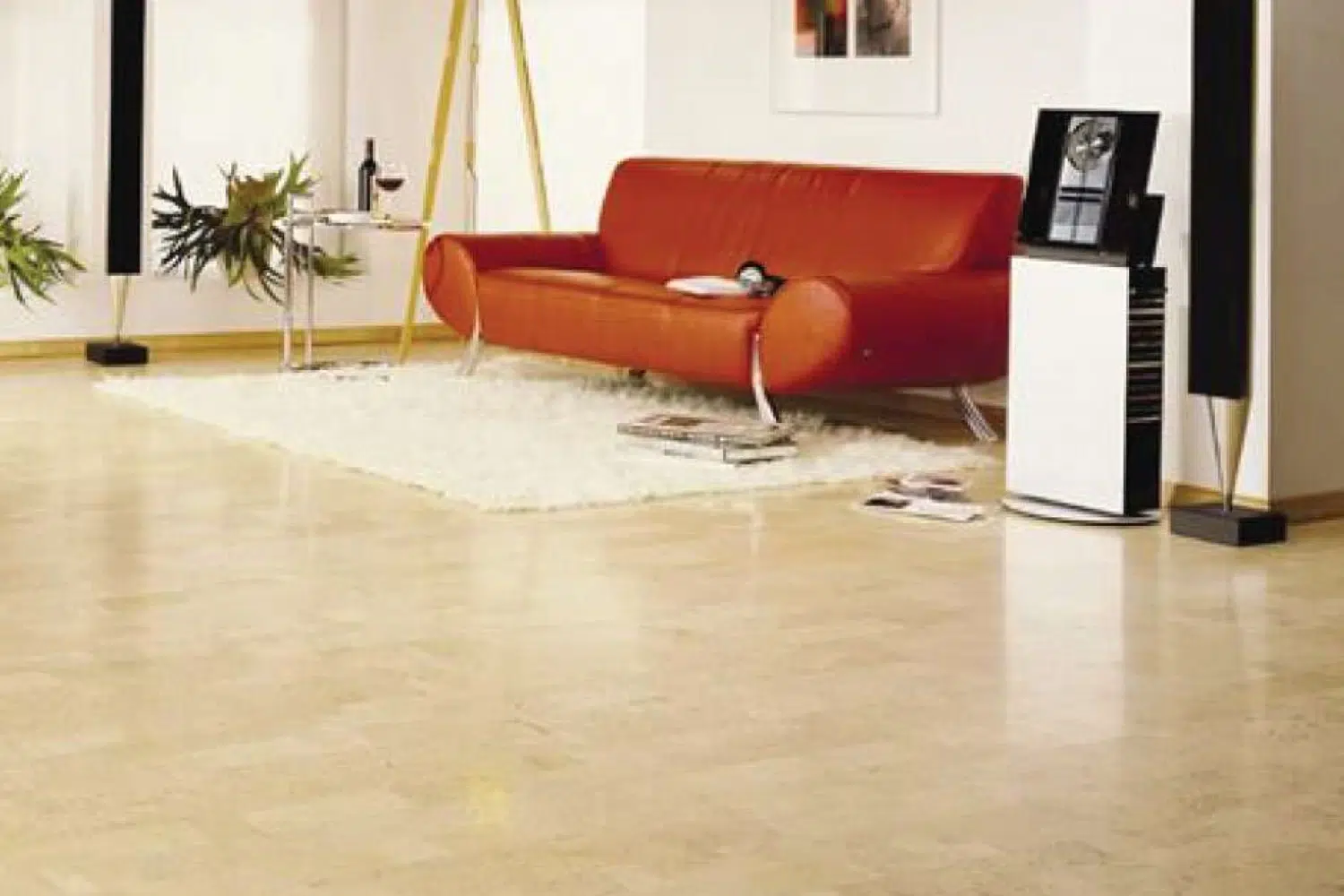
Cork is a naturally occurring and renewable substance. It is extracted from the bark of cork oak trees native to Spain, Portugal, and Tunisia and has been used in building for generations. It has grown in favour as a flooring material across the world due to its durability, attractiveness, “green” properties, and other distinguishing features. Cork flooring is made of:

Healthy For Our Environment:

The antimicrobial properties of cork flooring are quite healthy for our environment. It contains suberin, a waxy component found in the cell walls of cork tissue (an inert impermeable waxy material). This is wonderful if you are thinking about installing a cork floor but have allergies or small children. It has a natural repellent effect on tiny vermin and insects. Cork floors are so resistant to the growth and colonisation of these organisms and can thus contribute to the promotion of a healthy environment.

Renewable:

Cork is a naturally renewable and ecologically beneficial material. It is extracted from the bark of the Cork tree without harming the tree. Every few years, the bark regenerates. It is a biodegradable flooring product that, when discarded, will degrade in the environment. Thus, making cork flooring much more environment-friendly.

Sustainable:

Cork is a sustainable alternative since it is a natural and renewable resource that can be utilized without the guilt that comes with utilizing hardwoods from tropical rainforests.

Doesn’t Emit Harmful Fumes:

Cork is fire-resistant and will only ignite at extremely high temperatures. Cork flooring emits considerably less harmful material before and during burning than vinyl flooring. Thereby, even if the cork flooring catches fire, the fumes and smoke emitted will not cause much harm to the environment.

These points highlight why we believe cork flooring is greener for our environment. With the installation of cork flooring, you can get the guilt off your shoulder that your flooring choice may negatively impact our planet and its environment. Thus, this flooring is not just attractive but also green.

19th April

Should You Select Bamboo Flooring For Your Space?

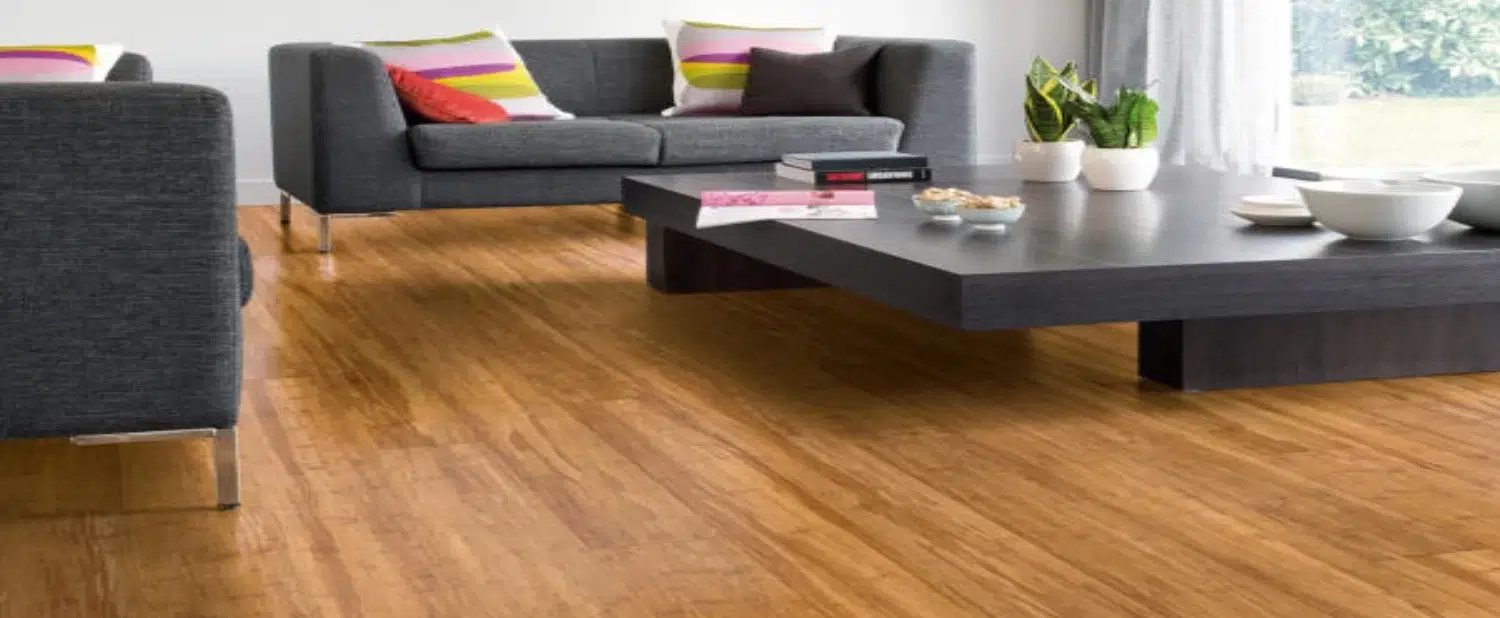
Bamboo is a wonderful flooring option. Firstly, it has gained popularity as a result of its environmental benefits. It is a fast-growing grass that matures in one-quarter the time that hardwood trees do. This also makes it less expensive than hardwood. Bamboo is ecologically friendly and long-lasting. If you want a long-lasting and durable floor, choose strand-woven bamboo. It is more than twice as durable as oak flooring, making it perfect for high-traffic areas or commercial buildings. Bamboo flooring is quite versatile. Let’s look at why bamboo flooring should cover the length and breadth of your space-

Sustainable:

Bamboo is a wonderful alternative that delivers beauty, and flair, and is also sustainable. It is a self-regenerating grass which can grow at a rapid rate. This implies that the bamboo is ready to harvest in around 5 years (as opposed to decades for an oak tree), and it continues to grow without deforestation or re-planting. It also grows on its own, without the need for chemicals or pesticides. It truly is an eco-friendly and long-lasting natural flooring product.

Durable:

When you compare bamboo with timber such as oak, bamboo is twice as strong. This makes bamboo flooring ideal for use in a high-traffic area such as a hallway, living room, or kitchen. It may even be used in commercial premises because it can handle significant foot traffic. It can withstand years of harsh usage as well.

Versatile:

Bamboo flooring may be used in practically every room of your home. Wet places, such as utility rooms and bathrooms, are the sole exceptions. Strand woven bamboo flooring is not suitable for use with underfloor heating, in conservatories, Strand woven bamboo is installed floating over an underlay not glued.

Unique Aesthetic:

The bamboo stalks’ natural striation adds a particular elegance to the floors in every area. You can be confident that your bamboo floors will look just as beautiful in 15 years as they do today because bamboo is a timeless material.

These are some of the major reasons why we believe bamboo flooring can give do justice to your space. How it will decorate the length and width of your space. Needless to say, the natural bamboo flooring is quite less denting to your pocket as well.

Should You Select Bamboo Flooring For Your Space? Yes definitely!

14th April

What Sets Apart Timber Flooring From Other Flooring?

What Sets Apart Timber Flooring

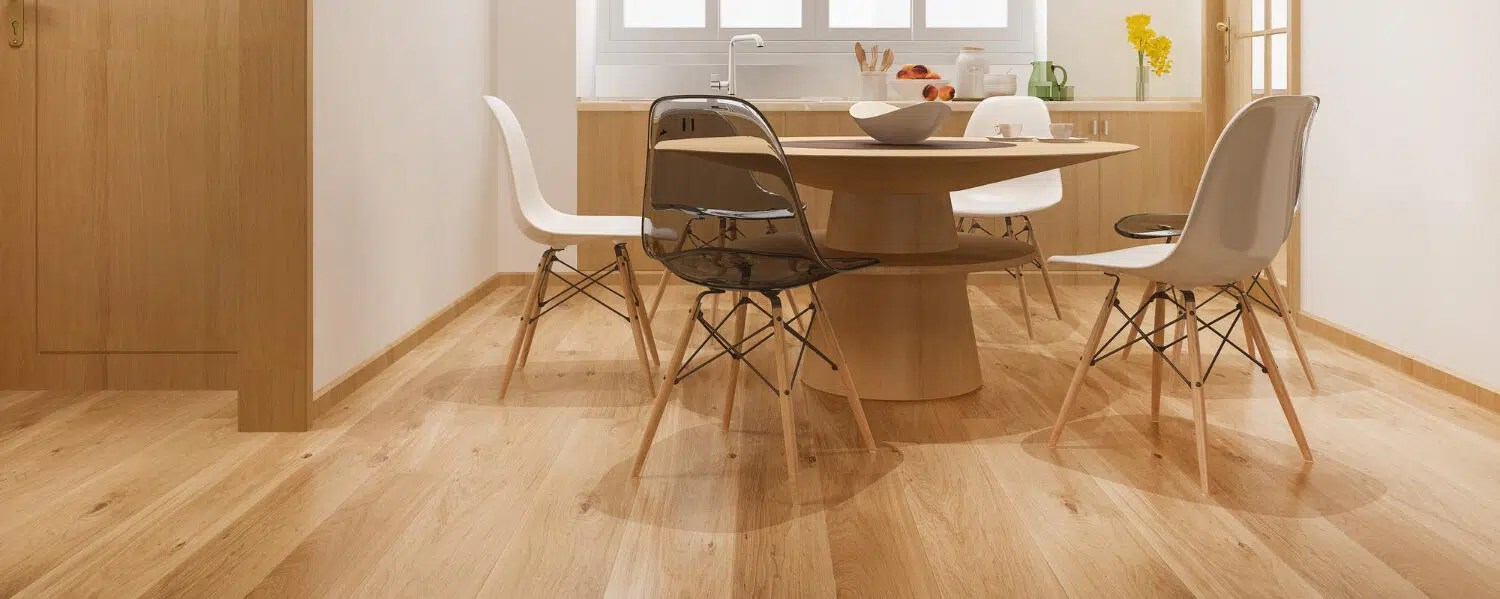
Flooring is an essential part of your home. With the installation of the right kind of flooring positive aesthetic appeal of the house is increased. Numerous types of flooring are available on the market these days. There is one type of flooring that not only stands out but is also more appealing. Timber flooring has its own charm, making us feel closer to nature. Let’s look at what sets apart timber flooring and how it can make your floor look better.

Chemical Free:

People are frequently hesitant to install timber flooring because it might cause discomfort and allergies. People, on the other hand, do not exhibit allergy symptoms when they are in the midst of nature, in a forest, or surrounded by woodlands. This occurs because the timber floor is occasionally chemically painted. Anti-sapstain chemicals and aromas are applied to timber flooring to make it shinier and inviting which can cause allergies. When you choose green flooring they are harmful chemical free.

Green Zero-VOC:

Unlike past flooring options, some timber planks that are available today have a green zero-VOC finish. The zero-VOC offers better finishing without harming your health. This kind of timber flooring lets you enjoy natural floors for a long time without any harm effects.

Aesthetic Appeal:

When it comes to aesthetic appeal no other flooring can come close to the beauty of timber flooring. Timber flooring is known for its elegance and classy aesthetic. The long veins wood grain makes the flooring look stunning. It adds to the overall aesthetic of your space.

Scratch & Water Resistant:

People tend to underestimate the quality of timber flooring against scratch or water. Scratches tend to appear more on tile flooring. The strong and sturdy wood flooring is much more resistant to scratches. Unlike previously available timber flooring, the timber flooring available currently is more resistant to water. This is because they are coated with a waterproof coating. This coating prevents water from harming the structure of timber. Thus, the timber flooring lasts for a long time.

These are some of the reasons why we believe timber flooring is much different than your other regular flooring. When you install timber flooring, it will look stylish and elegant for years to come. Unlike some flooring that is available in the market. So, when are you going to pick your favorite timber flooring?

View our timber ranges today here